Wednesday, April 22, 2020

Earth Day 2020

I inherited a love of nature from my grandma and grandpa Matkin. 

As a young boy, my grandpa took me on walks in the coulees and in the mountains. He taught me how to identify and classify the plants and animals we saw. He showed me that the more you knew about nature, the more respect you had for it. More recently, I inherited from him his 35mm slides of wildflowers, with the flowers' names carefully labeled. As I went through them on an old projector with my kids, I thought how wonderful it is that I had a grandpa who took pictures of wildflowers.


My grandma taught me how to see and appreciate beauty. She was breathless in her enthusiasm over pretty flowers and trees, scenery and birds, especially hummingbirds. One of my favorite stories of her is when she was snorkeling in Hawaii. She became overcome by all the vibrant colors and diversity of the tropical fish to the point where she had to stand up in the crowded bay and shout out loud, "Oh! You are all so beautiful!" Her reverence for creation always felt like a big part of her religion, and it stuck with me.


Our church teaches some amazing doctrine about the earth, and how we must learn to both take care of it, and to share it.


Joseph Smith revealed:


"For it is expedient that I, the Lord, should make every man accountable, as a steward over earthly blessings, which I have made and prepared for my creatures.


But it must needs be done in mine own way; and behold this is the way that I, the Lord, have decreed to provide for my saints, that the poor shall be exalted, in that the rich are made low." (D&C 104:13,16).


And again Joseph Smith teaches:


"For, behold, the beasts of the field and the fowls of the air, and that which cometh of the earth, is ordained for the use of man for food and for raiment, and that he might have in abundance. 


But it is not given that one man should possess that which is above another, wherefore the world lieth in sin. 


And wo be unto man that sheddeth blood or that wasteth flesh and hath no need." (D&C 49:19-21)


That is some pretty radical stuff there.


Modern day prophets have pointed out the relationship between spiritual pollution, or sin, and the subsequent pollution of the earth. And while some stubbornly question man's environmental impact, especially climate change, I think that "seas heaving themselves beyond their bounds" and increased natural disasters and climate extremes in the last days is solidly scriptural, and that it is a result of our wickedness, namely our greed, our rampant consumerism, and social and economic disparity.


Enoch saw the earth groaning, saying "Wo, wo is me, the mother of men; I am pained, I am weary, because of the wickedness of my children. When shall I rest, and be cleansed from the filthiness which is gone forth out of me?" (Moses 7:48)


And finally, President Spencer W. Kimball:


"When I pass through the lovely countryside or fly over the vast and beautiful expanses of our globe, I compare these beauties with many of the dark and miserable practices of men, and I have the feeling that the good earth can hardly bear our presence upon it." (The False Gods We Worship, 1976)


I believe that reverence and good stewardship for the earth, especially by sharing more freely our resources, will inevitably turn our hearts to God, and vice versa.


In short, I believe as Latter-day Saints and Christians, we should take our environmental stewardship very seriously.


Happy Earth Day.


Monday, April 6, 2020

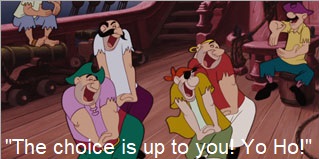
Peter and His Shadow

This week, I had a sobbing nine year old in my arms. He was frustrated and burnt out trying to be good. He had done his very, very best. I could tell he had tried to be a kind brother, and to do what he was told, but he has a temper, he likes to tease, and when he doesn't get his way, he often resorts to violence. In despair, he said he was just bad no matter how much he tried; that he had might as well give up and accept it.

I had to admit to myself that I understood what he was feeling. I understood it so well that it hurt.

A thought hit me, though, and we got talking about Peter Pan and his rebellious shadow. His name is Peter, so the connection came easily.

The story of Peter Pan begins with a severed shadow that doesn't like to behave. The shadow romps wild, gets into mischief, and refuses to obey the real boy Peter, to whom it is supposed to be attached.

I asked him, "Which one of them was the real Peter? The shadow or the boy?" He answered of course, "The Peter." But this was a bit of a trick question, because both of them can feel just as real as the other.

He and I then spent some time in the scriptures discussing what it means to have a "natural man." Each of us comes to earth with a body, one that is full of passions, appetites, and carnal responses that are designed to survive in the fallen world around it. Like Peter, we all have a shadow and, try us as we might, we can't make it just "go away."

Though it feels as real as can be, our physical body, together with all our millenia of finely tuned evolutionary reactions and passions and animal instincts is only a shadow of who we really are. It is a temporary existence. It will die. The truest Peter is the spirit inside you, the son or daughter of God, the boss to whom the shadow must learn to obey and respond correctly to life's complicated stimuli. 

But that doesn't mean that our feelings and temptations aren't real. They are an integral part of who we are. We cannot become who we are inside by killing the shadow. Our mortal wrestle isn't to find out which one will live and which one will die. Having a shadow just means that we learn to integrate them together, to find balance between our spiritual and physical selves. They must learn to live together.

The Shadow

The amount of light we have shining in our lives will affects our shadow's size. Some days, when the source of light is low, our shadow rises up to 2, 3 times the natural size of our spirits. Other times, when the sun is high in the sky and all the world looks bright, it seems to shrink down to almost nothing.

Learning to master that shadow, our physical self, is the principal purpose of our existence here.

"For the natural man is an enemy to God, and has been from the fall of Adam, and will be, forever and ever, unless he yields to the enticings of the Holy Spirit, and putteth off the natural man and becometh a saint through the atonement of Christ the Lord, and becometh as a child, submissive, meek, humble, patient, full of love, willing to submit to all things which the Lord seeth fit to inflict upon him, even as a child doth submit to his father." (Mosiah 8:19)

So, what does that mean, to "put off the natural man"?

"You can't stick it on with soap, Peter. It needs sewing."

Everyone has a shadow. As a gay man, my shadow sometimes feels more complicated than most, but I don't think it really is essentially different. Like anyone else, my particular shadow does not always match my spiritual desires. I know that I am a child of eternal parents, that marriage is an inescapable part of both my physical and spiritual heritage, and my spirit truly wants to try and follow God's plan of marriage and family.

However, I simultaneously have a body that, simply put, wants to have a long-term, intimate relationship with a man. My natural self is not aligned to my spiritual self. They are mismatched. Like Peter, my shadow does not function the way my spirit wants it to.

Like Peter Pan, for years I tried to reconnect my shadow with soap. I believed I had to repent of my natural man. I had to "pray the gay away." I had to cleanse myself of my physical attractions. I believed that since I had a body that wanted those things, that I was sinful.

It was a huge and deeply personal revelation to me when I realized that the Lord accepts me how I am. I mean how I am now. He knows all about my shadow, and He doesn't expect me to kill it or wash it away with soap or get rid of it at all. He designed it. He gave my shadow to me this way. On purpose. He knows it doesn't match the celestial glory I came from and am trying to get back to. He doesn't need me to repent of my natural feelings or attractions or desires. They are not a sin. This is important, because if I thought I had to get rid of my shadow to get to heaven, and change my mortal attractions, extract any unrighteous desires in order to be accepted by Him, and, well, the only option to do that would be suicide. If the suicide rates among LGBT youth prove anything, forcing that kind of a narrative on a vulnerable person leads them to it. I have spent some time considering the logical conclusions to that line of thinking, and I will not go back there. There is a better way.

As Wendy told Peter, "You can't stick it on with soap, you know." While sins can be washed away by the atonement of our Savior, our shadows stick with us. This is important, and it is part of God's plan. Our shadows are the catalyst for both growth and grace.

However, God does expect us to learn to control our shadows. We can't have them romping around the nursery and making a mess. How can we do this? As the scriptures teach us, it is done by bringing our "natural man" to Christ. Christ has promised me a gospel program that will help get my shadow synchronized with who I am inside. This is done by keeping the commandments which He has provided. But just like Peter couldn't sew on a shadow, or even knew what sewing meant initially, I require a Savior to do this part. A disobedient shadow needs sewing. It requires sealing. A rebellious shadow requires making and keeping covenants that bind me to Christ.

In the book Peter Pan, Wendy says, "I daresay it will hurt a little." And it really does. But it is the only way there is to get me put back together properly.

The Resurrection

The Savior is the Master of dealing with our shadow selves. He does it not by throwing them away, or banishing them, or burying them forever in the graveyard. Our flavor of Christianity is somewhat unique in our insistence of a literal, physical resurrection, complete with a God with "body, parts, and passions." Our physical body, our "shadow," is not something to get rid of. It is an important part of the plan, that even God has one, and we need one to find joy. Christ promises us that our bodies will rise up, joined forever to our spirits to never again be separated. He promises us a resurrected body that matches perfectly our spiritual selves.

In the meantime, we get to decide what kind of spirit our resurrected body will be matched to:

Therefore, as they had become carnal, sensual, and devilish, by nature, this probationary state became a state for them to prepare; it became a preparatory state. (Alma 42:10)

Our physical selves will be joined forever with our spirit, yes. But the type of body we get will depend entirely on the type of spirit we have chosen to become here. Alma teaches Corianton at length about the resurrection, that who we are here will determine what we are resurrected to later.

And now behold, is the meaning of the word restoration to take a thing of a natural state and place it in an unnatural state, or to place it in a state opposite to its nature?

O, my son, this is not the case; but the meaning of the word restoration is to bring back again evil for evil, or carnal for carnal, or devilish for devilish—good for that which is good; righteous for that which is righteous; just for that which is just; merciful for that which is merciful. (Alma 41:12-13)

If I choose to live contrary to celestial law of marriage and eternal family now, how can I expect to be raised up a celestial body in the next?

Paul explains that there are different types of bodies we can receive, depending on our choices here in mortality:

"There are also celestial bodies, and bodies terrestrial: but the glory of the celestial is one, and the glory of the terrestrial is another...So also is the resurrection of the dead. It is sown in corruption; it is raised in incorruption...

The first man is of the earth, earthy [the shadow]: the second man is the Lord from heaven. As is the earthy, such are they also that are earthy: and as is the heavenly, such are they also that are heavenly. And as we have borne the image of the earthy, we shall also bear the image of the heavenly."(1 Corinthians 15:40,42, 47-49)

What we sow in this life will determine the type of body that will rise in the next. If we sow celestial seeds by submitting to the plan of God, putting off our natural, carnal selves (our earthy selves, as Paul puts it,) keeping commandments (including chastity), then we will receive a body that will match our "the image of the heavenly" of who we were before we came to this earth. The shadow will be synchronized with our spiritual selves. While we will all make many mistakes and live contrary to God's spiritual laws multiple times a day, if we stick with Christ and repent and try to live according to the gospel, He promises us that we will be made a new creature in the resurrection. A perfectly integrated creature.

As hopeless as you feel integrating your shadow into your spiritual self, His atonement is infinite. He specializes in miracles, even in raising the dead. He will raise your shadow romping around the nursery and grow him or her up into a son or daughter of God.

Who We Really Are

Growing up gay in the gospel was/is a difficult process. My main question I wrestled with is the one all people must face, "Who am I, really? What do I really want? Do I even want this stuff? Why would I want to live in an eternal family, anyway?"

When I was young, I knew I had felt the spirit before, I loved the gospel, and the teachings of the church resonated in my heart. I truly wanted to be a dad and a husband. I wanted family. My spirit wanted it. It was a part of who I was. It was an undeniable part of my spiritual identity.

But at the same time, I also had feelings that absolutely contradicted these desires. I wanted a husband. I wanted a sexual relationship with another man in a way that I was taught was contrary to the plan of God.  My whole self seemed to crave it. It was also a part of who I was. It was an absolute part of my mortal identity.

I was mismatched. The wrestle between those two parts of me was dire. It seemed like an impossible battle. And it is.

Lehi taught Jacob:

For it must needs be, that there is an opposition in all things. If not so, my firstborn in the wilderness, righteousness could not be brought to pass, neither wickedness, neither holiness nor misery, neither good nor bad. Wherefore, all things must needs be a compound in one; wherefore, if it should be one body it must needs remain as dead, having no life neither death, nor corruption nor incorruption, happiness nor misery, neither sense nor insensibility.

Wherefore, it must needs have been created for a thing of naught; wherefore there would have been no purpose in the end of its creation. Wherefore, this thing must needs destroy the wisdom of God and his eternal purposes, and also the power, and the mercy, and the justice of God. (2 Nephi 2:11-12)

There is not just opposition to all things. There is opposition in all things. In me. In my very nature. The struggle inside me was (and continues to be) a difficult part of my mortal experience. But the opposition is what helps me to grow, and it is by design.

Which part of me will I choose to follow?

Lehi reminds his son, "Remember, to be carnally minded is death, and to be spiritually minded is life eternal." (2 Nephi 9:39)

I can't put my physical and spiritual selves together any more than I can raise my dead body up and stick my spirit back into it. Putting them together is Christ's job, not mine. 

But what is my choice is whether I will stick with Christ and have faith in His ability to make a miracle out of my mismatched life.

As a son of God, my spiritual DNA is designed to become like Him. To grow up. But unfortunately, there is no forced maturity in God's plan. I have to choose, and then choose it again. And then again. Every broken day I get to choose.

My question is the same question for everyone, whether you are gay or not: Will I let my shadow self run wild in Never-Never Land and choose never to grow up, trying to find my identity with the rest of the lost boys? 

Or will I fly back to reality, and to Christ?

captainhook 

Monday, January 27, 2020

The Name Vivian Means Alive

When you were, you were full of life, clapping your hands when we got together, holding my little arms and dancing ragtime across the floor. You passed food around the room with authority, with the experienced motion of a well oiled machine. You arranged us into places; you gathered us, crammed us into your living room that was more than a living room. When I was a child, you felt like a womb, and when I sat there on your lap and had you read about Strawberry Shortcake and Huckleberry Pie, your breath was warm in my ear. You were all velveteen and lotion. When you put my own children on your ninety year old lap and bounced them up and down the way the lady rides, I remembered that. They all fell asleep in your arms while you hummed, rocked them gently as if your whole body were music.


The resistance you displayed when we cajoled you to sit down on the organ bench was a necessary act of humility. You sniffed before you played, reached your feet down to the foot pedals as though putting on your most comfortable shoes, and leaned back. Your fingers flipped the stops effortlessly and at last settled on the keys. You looked over at us and smiled. And then you played.


In the end, it was organ failure. A cruel joke, I thought. The infection spread through your mortal circuits and flipped off the switches of your melody, one by one. The rushing of air out of you was like a pipe organ being powered down. When I touched your hand as you lay dying in the hospital, it was not your hand. It was not your instrument anymore.


When we buried you, it was right next to the Organ family in the cemetery. I didn't even know that Organ was a surname and I almost wondered if they were put there as props. We poked each other through our winter coats and pointed to the snowcapped tombstones when we saw them there, and smiled our wan little smiles. Then I stepped forward, stood by your body, bowed my head, and dedicated a rectangular piece of ground to you, promising you that it would not stay closed forever, that you would rise in the morning of the first resurrection.


I was hardly your most musical grandchild by far, but I was the one who got your organ. I chuckled to call you my "organ donor." After we carried it into my home I sat down on the bench and cried when I realized the cover over your keyboard was locked, and I had lost the key in the move. For several weeks it sat there like a vacuum, like an aggravating weight, heavy in the silence. In desperation, I succeeded in picking the lock. I lifted the lid and started to play it surreptitiously, feeling like a bandit, looking behind me occasionally because I could never play it the way you did, and I thought you might be watching. Besides, it was still yours somehow without the key.


When we were pregnant again, you had been gone two years. It was a hard pregnancy for my wife. The valley of death for a mother can be in the mind, too. Depression is a thief. But with every little flutter of our child inside her, I knew there was hope still. There was a spirit fighting for life in there, and it would only grow stronger and more viable in time. At last, my wife became the mother of all living once again. It was a role, Nana, you had mastered by the end.


We named her Vivian, after you, and just before she was born, we found the key. Your old organ key. It was buried in a potted plant, of all places. My five year old scoundrel must have wedged it in there without thinking, the way little boys do mindless mischief when they wander bored through a room. I held it up and thought to myself, grasping for a metaphor, "This organ key was buried the same way you are." It was certainly rusted a bit, but it still fit the lock, and when I turned it this time, I knew it was with your permission. 


You are playing your music somewhere up there, and I have to believe you are still alive to share it with me.


Tuesday, August 27, 2019

The Holes in the Stone

"Whoso pulleth out this sword of this stone and anvil, is rightwise king born of all England."

The Sword in the Stone is a great story. A sword, the classic symbol of kingship, is stuck tight and immovable within a stone, and only the chosen one, a young, inexperienced, but pure-hearted Arthur can remove it.

All who aspire to be king, to fulfill their own interests, no matter how hard they try, cannot "stir the sword nor move it." According to Sir Thomas Mallory, the right one "is not here that shall achieve the sword, but doubt not God will make him known."

Well, He did.

It is useful to compare the Arthurian legend to the Restoration. The sword, the authority and power of Christ, was sealed away in stone for many centuries until Joseph Smith was called to restore the kingdom again on the earth. The stone is obviously Christ, the source of all priesthood authority. He is a "stone of stumbling and a rock of offense" to those who would very much like to wield that authority and establish their own kingdoms here on earth, but they will never be able to wield the sword of Christ's priesthood for their own personal gain.

But the story of the Restoration is not really about Joseph Smith. It is not even about the sword, the authority of the priesthood.

The story of the Restoration is a story about the Stone.

When I was young, I was scrawny and not very smart, and looked a lot like "Wart" in Disney's The Sword in the Stone. (One could even argue that I haven't changed much.) I wore hand-me-down clothes that were too big and a tie that was too long. Like Arthur, I had my Merlins in my life, primary teachers and parents and the words of prophets to teach me my spiritual ABCs. They helped prepare me to one day receive my sword.

I was introduced to the Stone early. As a family, we went to visit it often in the churchyard. I recognized its importance, but sitting in the pews and staring at it, I can't say that I really understood my relationship to that Stone.

Then when I was 12, I was presented with the sword of priesthood power. They placed hands on my head and authorized me to use it. But the power was still wedged tightly inside the stone to me, and the idea of removing it seemed impossible at that time, and I was not particularly interested in removing it anyway. "Maybe someday when I am stronger, or when I am more grown up," I thought.

However, as I grew, going through the motions, I began to pay more attention to that Stone. I noticed that the Stone was not just a container for the sword, but that it was actually wounded by it. The primary reason I noticed this was because at about that time, I started to realize that I was wounded and full of holes. Maybe I was projecting, but the rock became more relatable to me as I realized my own wounded condition was reflected by the Stone. For me it was the wounds of being an insecure teenager, isolated and afraid and uncertain about my future. But it was a myriad of other things as well. I realized that on my own, no matter how I measured myself, I always came out wrong.

My interest in the stone grew slowly. I wondered what would happen if I tried to actually pull out that sword. I started to feel bad to think that the Stone was eternally pierced by that sword for me, and I hadn't even tried to remove it yet and use it. There was nothing I could do to undo what had happened to that Stone. The Stone was already pierced by it, and He did it for me, that I might be armed against the things I was up against.

Taking that sword out was somewhat anticlimactic. There was no heavenly choir, at least not to my ears. In fact, I felt even more clumsy and weak as I realized that the sword was far too heavy for my scrawny little arms, and it probably always would be.

But this story is not really about me, anyway.

Again, this story is about the Stone. The Stone did not just pass me the sword and then sit there, inert and glistening in the faraway churchyard. The Stone became an active part of my life, the main character in my Arthurian legend, because my sword will always be His. It is Him that gives me strength to perform my own role, however small, in the Kingdom Joseph Smith helped to restore. And he wasn't perfect wielding that sword, either.

All members of the church, male and female, have been authorized to wield the sword in the stone, the power of Christ. As has been clarified by apostles, priesthood power is available to all in this church, both men and women. But first, we must get to know the Stone. We have to see and feel of the Stone's woundedness, and recognize how He reflects and fills in for our own mortal gaps, our holes and our wounds. We have to reach for the gift He offers us, to pull out of Him his grace and His power, and wield His sword the way He showed.

Thursday, November 1, 2018

Born Blind

 healing-the-man-born-blind-1311

Jesus Christ passed by a man who was blind from birth. His disciples asked, "Master, who did sin, this man, or his parents, that he was born blind?" (John 9)

As usual, we all wonder sometimes about this fallen world and try to lay blame. Whose fault is it? Who caused all these trials, the disabilities, the injustice? Or in a similar way, we ask, "Why me? What did I do to deserve this?" Surely it must be someone's fault.

The question surrounding the man born blind reminds me of questions I have heard regarding same-sex attraction. In the debate regarding SSA, there is an oft repeated question: Is it nature, or nurture? Is it some inherent genetics of the individual, or was it the upbringing of the child, the social situation, etc.? Was it because of a distant father, or an overbearing mother? Was it because of abuse? Did this person choose to be gay?

As latter-day saints who understand that homosexuality is contrary to the plan, we sometimes focus on these questions, which all relate to the disciples' question of who "sinned," the individual or his parents.

Jesus Christ re-frames and revolutionizes the whole argument: "Neither hath this man sinned, nor his parents: but that the works of God should be made manifest."

Then Christ proceeds to do His miracle, healing the man with His own spit and a bit of clay.

I have seen some parents of a gay child who are full of guilt that they may have done something wrong. I have seen individuals, including myself at times, full of shame, blaming their same-sex attraction on themselves for not being good enough. Others resign themselves that this is just a part of life. There is no purpose for it at all—being gay is just the random chances of a fallen world—and so they set themselves up to "white knuckle it" until they can somehow be "fixed" in the next life. 

But Jesus Christ doesn't see it this way. He gives purpose to our trials. They exist, purposefully, as a way to manifest the works of God in our lives.

"I give unto men weakness that they may be humble; and my grace is sufficient for all men that humble themselves before me; for if they humble themselves before me, and have faith in me, then will I make weak things become strong unto them." (Ether 12:27)

Why do we need weakness? It seems like something I would rather do without.

However, who can appreciate sight more than the blind man? Likewise, who can appreciate Christ, the light of the world, more than the individual who has gone through spiritual darkness? The self-righteous Pharisees who had no interest or use for this miracle-worker—they could not understand him. The healed blind man, who explained repeatedly the miracle to the incredulous audience, was surprised at their lack of understanding, saying, "Herein is a marvelous thing, that ye know not from whence he is, and yet he hath opened mine eyes!" In other words, it takes a blind man to see who Christ is, while the Pharisees with their perfect little 20/20 eyeballs couldn't seem to see Him at all.

The works of God have been manifest in my life, and in the lives of many other gay latter-day saints, over and over. But what about healing? Are we ever really healed? What does healing look like for a gay latter-day saint?

Well, maybe not quite as you might think. Same-sex attraction is not removed, or "healed." Our sexual attractions tend to stay a part of who we are. Perhaps this is because being gay is not quite like blindness. Perhaps because SSA can actually be a kind of sight. For me, being gay has helped me to see things I otherwise could not see: my own suffering reflected in the struggles of others; and above all, to see more clearly the Savior, and how much I need Him. In my moments of blindness, same-sex attraction has given me eyes to see the light, which is Christ. Perhaps the miracle of healing is not about removing sexual attraction, but that through my faith in Christ spiritual sight can be restored.

As Christ said to the pharisees who continued to pooh-pooh Christ's miracles, "If ye were blind, ye should have no sin: but now ye say, We see; therefore your sin remaineth." Recognizing our own individual blindness, to be humble as explained in Ether 12:27, is the only way to see Christ properly.

Christ's process of healing has been as intimate an experience for me as feeling the Savior's spit and clay pressed onto my eyes. Though I still am required to walk by faith in this life, and not by sight, I know enough to believe that a perfect understanding of my trial awaits, in that day when I stand blinking in the sudden light of the resurrection. Then I will see Christ, my Savior, standing before me with absolute love and understanding. I will see that He really got his hands dirty with spit and clay for me this time, and that He really worked hard to heal me and to bring me home, ultimately giving His life to make me whole. 

I will see that He still has proof of it in His hands.

Tuesday, June 5, 2018

Wild Roses Are Out

Wild roses are out.

The colors flash out my window, like they did when I was young and I wanted to know what each species was. Its name. What is your name! When I was thirteen, biking through my thirsty summers, I wanted to pluck off blossoms, press them in a book, and mispronounce Latin.


In my car, I pull over suddenly, kicking up dust. Now, twenty years later, I want to see. I want to see! And now, at last, I am alone in the driver’s seat.


The grass rises up to my knees, and the hill is steep. I step, pioneer-like, into unknown territory. The water has flowed down from the mountains in canals engineered by my ancestors. It has filled up the bottom of the coulees.


Behold!


“I know thee now.” Your names, I mean. The knowledge has kicked in finally, and it kicked me in my head, too. Sticky geraniums, lupins, sage, chicory, carpet phlox, blanket flower.


The sky opens itself up wide to God. It comforts me here. I belong. There are blackbirds, too. Some with yellow heads. Others with red on their wings. They warble and rasp their song at everything. At the world. At blue skies. At me, their lanky intruder.


God is involved here. It helps me to know this, especially now. Even if I do not know if He is involved in my life right now---the horrible tangled messy web I live in---I know he exists out here, miles away from my little room where I languish at a desk.


He is here. Under the sun, in the ripples of the water, in the buzz of the birds, in the sheen of a blackbird’s wing, and in the thorns of the wild rose.


Thursday, January 18, 2018

Roasted Lamb

I heard something really interesting yesterday and I liked it. It was in the context of how we interpret the Old Testament, and at one point he specifically mentioned the Passover.

At Passover, the Israelites killed a lamb and used its blood to mark their doors. The symbolism for the blood of the Lamb, which would be Jesus Christ, is apparent there, for sure. After they used the blood to mark their houses, the Israelites were specifically instructed to roast the lamb and eat it--all of it. It was not to be boiled. It had to be roasted with fire. Also, they could not leave any piece uneaten before morning.

The scholar points out that the symbolism here is that we must "partake of the gospel of Jesus Christ with the Spirit. The Spirit is symbolized in the Old Testament by fire." The symbolism for eating all of it is that we must partake of all of the gospel, not a piece here and piece there. So the lesson is that we must partake of the gospel with the Spirit, and we must eat it all.

This fits in nicely with the revelation given to Joseph Smith in D&C 50:19-20:
"He that receiveth the word of truth, doth he receive it by the Spirit of truth or some other way? If it be some other way it is not of God."
It made me think of all the ways we (myself included) try to live/teach the gospel without the Spirit. All the ways we present the Lamb boiled, microwaved, pickled, or basically any other way except roasted by the Spirit.

Some examples of boiled, unfinished mutton:

1. We rely on our own talents of persuasion or speaking to teach the gospel.
2. We rely strictly on our own understanding and knowledge.
3. We seek to entertain or excite either ourselves or others.
4. We seek out deep, speculative questions that the Spirit does not reveal the answers to yet.
5. We accept the gospel only as it fits into our own beliefs and understanding.
6. We think of the gospel as mere facts that must be learned.
7. We rely on traditions, precedent, or mindless standardized answers.
8. We engage in contentious debates.
9. We teach or live the gospel for the praise of others.
10. We accept the parts of the gospel we like, and reject the parts we don't.

I am sure there are more I could come up with.

Last Sunday, I taught a lesson to the youth on the Holy Ghost. I had some things to talk about that I thought were really great ideas. I had a great plan. About ten minutes into the lesson, things were not going well. I didn't feel right, and I could tell I wasn't reaching my students. As I got to the end of the lesson, I knew I had lost them. That's when I realized with great embarrassment that I had not prayed at all asking for the Spirit, neither when I got the lesson ready, nor before giving it. I realized I was relying on my own understanding to impress the youth. The hypocrisy was rich. There I was, trying to teach about how important the Holy Ghost is in everything we do, without even taking the time to seek it in my lesson. I am trying to repent for that.

What good is the gospel without the Spirit? It is like boiled lamb at Passover. The fire of the Holy Ghost is missing. There is no testimony, no witness, no comfort, and certainly no conversion.

This can be a hard lesson to learn.


(From Paul Hoskisson, Symbolism and the Flood in the Old Testament, http://www.ldsperspectives.com/2018/01/17/noah-flood-symbolism-bible/)